.

Showing posts with label Kengo Kuma. Show all posts

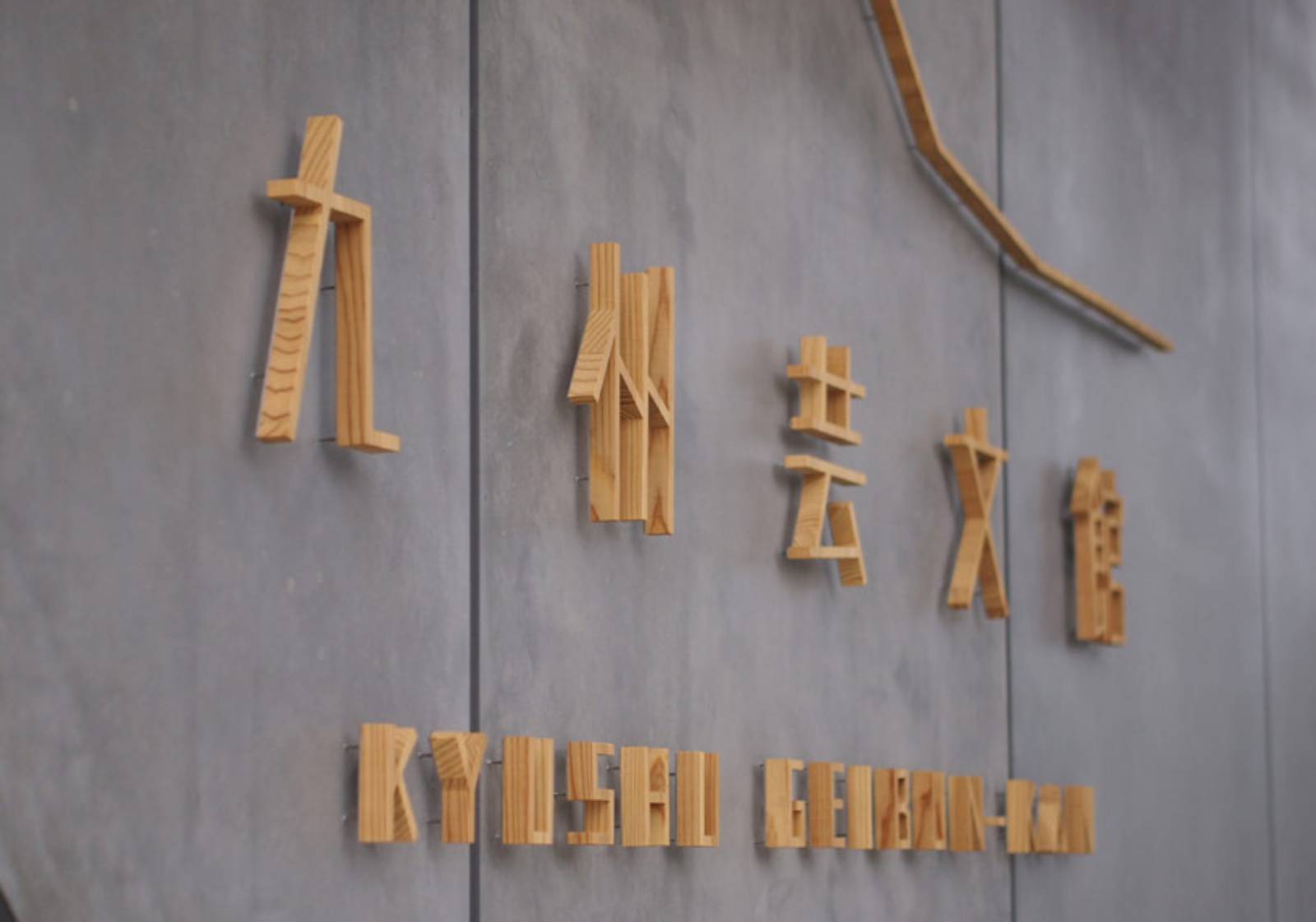
KYUSHU GEIBUN KAN BY KENGO KUMA

01-Kyushu-Geibun-Kan-by-Kengo-Kuma


In this project we propose a gate, or roof-centered cultural facility, which could replace typical box-shaped cultural complexes.


02-Kyushu-Geibun-Kan-by-Kengo-Kuma


The site is surrounded by a rich context of the locale – a station for Kyushu Shinkansen and Yabe River.


03-Kyushu-Geibun-Kan-by-Kengo-Kuma


We designed the new cultural center as a gate for the whole place, which will connect the station and the river, narrowing distance between the nature and the people.


04-Kyushu-Geibun-Kan-by-Kengo-Kuma


The texture of the building envelope is also informed by its rich context with stone and green wall elements incorporated into the facade.


05-Kyushu-Geibun-Kan-by-Kengo-Kuma


Views to the landscape are provided as the skin is cut and creased allowing natural light to enter through the irregular geometric volumes.


06-Kyushu-Geibun-Kan-by-Kengo-Kuma


The extensive use of wood throughout--seen in the floors and furniture--recall the natural site in which it is positioned.


07-Kyushu-Geibun-Kan-by-Kengo-Kuma


Smooth, ribbed, and woven exterior surfaces are reminiscent of the mountains, river, and passing trains in the physical surroundings, and the paper, silk, and wood used in japanese art through history.


08-Kyushu-Geibun-Kan-by-Kengo-Kuma


Blending the outdoors, and constructed space, this landmark becomes a locus for the community to appreciate cultural heritage and creativity.

10-Kyushu-Geibun-Kan-by-Kengo-Kuma
09-Kyushu-Geibun-Kan-by-Kengo-Kuma


12-Kyushu-Geibun-Kan-by-Kengo-Kuma
11-Kyushu-Geibun-Kan-by-Kengo-Kuma


14-Kyushu-Geibun-Kan-by-Kengo-Kuma
13-Kyushu-Geibun-Kan-by-Kengo-Kuma


Location:Fukuoka, Japan


Area:4157m2

Year:2013

GARDEN TERRACE MIYAZAKI BY KENGO KUMA


01 Garden Terrace Miyazaki by Kengo Kuma


Kengo Kuma è uno dei più grandi e raffinati ambasciatori della cultura architettonica giapponese con una chiave interpretativa che coniuga innovazione a tradizione.


02 Garden Terrace Miyazaki by Kengo Kuma


Una continua ricerca di relazioni tra architettura e natura con un uso dei materiali che favoriscano spazi aperti e ariosi, pieni di luce e carichi di armonia e suggestioni, come nella recente istallazione Naturescape realizzata per il Fuorisalone 2013.


03 Garden Terrace Miyazaki by Kengo Kuma


Spazio e materia sembrano ispirarsi a Sen no Rikyu (1522-1591) che si dedicò totalmente allo studio della cultura del tè giapponese e fu il primo ad elaborare dei principi per una corretta cerimonia del tè.


04 Garden Terrace Miyazaki by Kengo Kuma


Per Rikyu lo spazio ideale per la cerimonia è di piccole dimensioni per amplificare i significati che sottendono la cerimonia stessa, contribuendo a realizzare una più intensa e sensibile comunicazione tra uomo e materia.


05 Garden Terrace Miyazaki by Kengo Kuma


Kuma non solo ha fatto proprio questi concetti ma li ha reinterpretati in un linguaggio moderno, essenziale e suggestivo che non solo affascina noi occidentali ma trova un importante riscontro anche in Giappone, la sua patria nativa.


06 Garden Terrace Miyazaki by Kengo Kuma


Alla fine del 2012 risale la realizzazione  dell’hotel Garden Terrace di Miyazaki, in una città turistica del sud del Giappone, in cui Kengo Kuma ha realizzato il progetto recuperando un vecchio edificio industriale.


07 Garden Terrace Miyazaki by Kengo Kuma


Un unico edificio di forma quadrangolare con pareti rivestite in bambù e con un grande tetto spiovente che avvolge l’intero edificio, con una pendenza che parte dall’ingresso dove si trova la struttura in legno per poi degradare verso il lato opposto.


08 Garden Terrace Miyazaki by Kengo Kuma


Il bambù è piantato nell'acqua sia all’esterno dell’Hotel che all’interno nella grande corte, che distribuisce alle varie aree e vi si affacciano le camere distribuite nel perimetro, con un "ambiente calmo e tranquillo", come teorizzava Sen no Rikyu.


09 Garden Terrace Miyazaki by Kengo Kuma


All’interno della corte il bambù e l’acqua, disposta in apposite pozze, portano il paesaggio e l’estetica dell’edificio all’interno del grande spazio dove al centro è posta una cappella dove si celebrano le nozze.


10 Garden Terrace Miyazaki by Kengo Kuma


La cappella è un volume trapezoidale con pareti in vetro che esaltano le scenografie del verde della corte come si fosse in un luogo all’aperto, il ristorante e le sale per eventi sono disposte su tre lati della corte mentre le camere sono situate al primo piano.

12 Garden Terrace Miyazaki by Kengo Kuma
11 Garden Terrace Miyazaki by Kengo Kuma 


14 Garden Terrace Miyazaki by Kengo Kuma
13 Garden Terrace Miyazaki by Kengo Kuma 


16 Garden Terrace Miyazaki by Kengo Kuma
15 Garden Terrace Miyazaki by Kengo Kuma 


Location: Miyazaki, Japan

Architect: Kungo Kuma

Total floor area: 4,562 m2

Year: 2012
Photography: Fujinari Miyazaki

NATURESCAPE BY KENGO KUMA


Kengo Kuma


Con l’intento di promuovere l’area delle Varesine, un intervento di “riqualificazione” urbana nel cuore di Milano, si è tenuta Urban stories, che arricchisce il fitto calendario di eventi del Fuorisalone 2013, con una serie di allestimenti realizzati da Michele De Lucchi, Diego Grandi e Kengo Kuma.

Kengo Kuma


Naturescape di Kengo Kuma crea una straordinaria suggestione attraverso l’uso di elementi naturali come la pietra, acqua e bambù con una immagine che rievoca il giardino giapponese con forme morbide e liquide, realizzate in Pietra Forte Fiorentina, che modellano lo spazio dove è stata inserita una foresta di bambù.


Kengo Kuma

Una trasposizione green della precedente installazione realizzata per il Bologna Water Design 2012, ospitata nell’Ex Ospedale Bastardini, con l’intento di creare la topografia di un paesaggio reale dove l’acqua plasma la forma e conferisce al luogo un’armonia carica di quiete e semplicità, tipica della filosofia zen.

Kengo Kuma
Kengo Kuma 

GLASS/WOOD HOUSE BY KENGO KUMA


Kengo Kuma

This is a project in Connecticut (US) to repair a residence designed by Joe Black Leigh, and add a new house to the site.
 
Kengo Kuma

New Canaan is known as a town where many houses from the 1950s by such architects as Philip Johnson and Marcel Breuer still remain, and the one we worked on was the residence for Joe Black Leigh (built in 1956), also a friend of Philip Johnson.

Kengo Kuma

Our aim was to inherit the spirit of its beautiful glass architecture, or in other words, the spirit of New Canaan.

Kengo Kuma

The existing building was a symmetric glass box of Palladian villa architecture, standing solitarily in a forest. We built a new house to make this glass box orthogonal and formed an L-shaped terrain, as an attempt to create a kind of “intimacy” in the forest.

Kengo Kuma

Philip Johnson’s house stands alone, so we proposed the L-shaped plan in which the new building hitched on the old one, in order to present a new relation between the nature and the architecture.

Kengo Kuma

L-shaped plan is considered the prototype of the staggering layout in traditional Japanese architecture, which allows two axes to cross, frame varied spaces, create a sense of floating in the corners, and allow one to change consciousness by turning.

Kengo Kuma

As an attempt to make the architecture “intimate,” we adopted a type of mixed structure in the new house, where a wooden joisted roof comes over pillars of flat steel bars in 3 inches × 6 inches.

Kengo Kuma

In addition, we slightly shifted the position of the pillar at the corners to further enhance transparency and accelerate the moving of consciousness in this part.

Kengo Kuma

We gave a major change also in the existing house, by getting rid of the symmetry and covering the exterior with wooden louvers, so that the architecture would gain more “intimacy”.

Kengo Kuma

Thus, we worked to realize an “intimate transparency” or “mild transparency” to take over the isolated transparency of the 1950s.

Kengo Kuma
Kengo Kuma 


Kengo Kuma
Kengo Kuma 


Kengo Kuma
Kengo Kuma 


Location: New Canaan, USA 
Area: 830 m2 
Year: 2010